Define requirements
Turn initial needs and user feedback into testable operational behaviour, including the physical constraints behind an interface.
See the antenna-tracking case study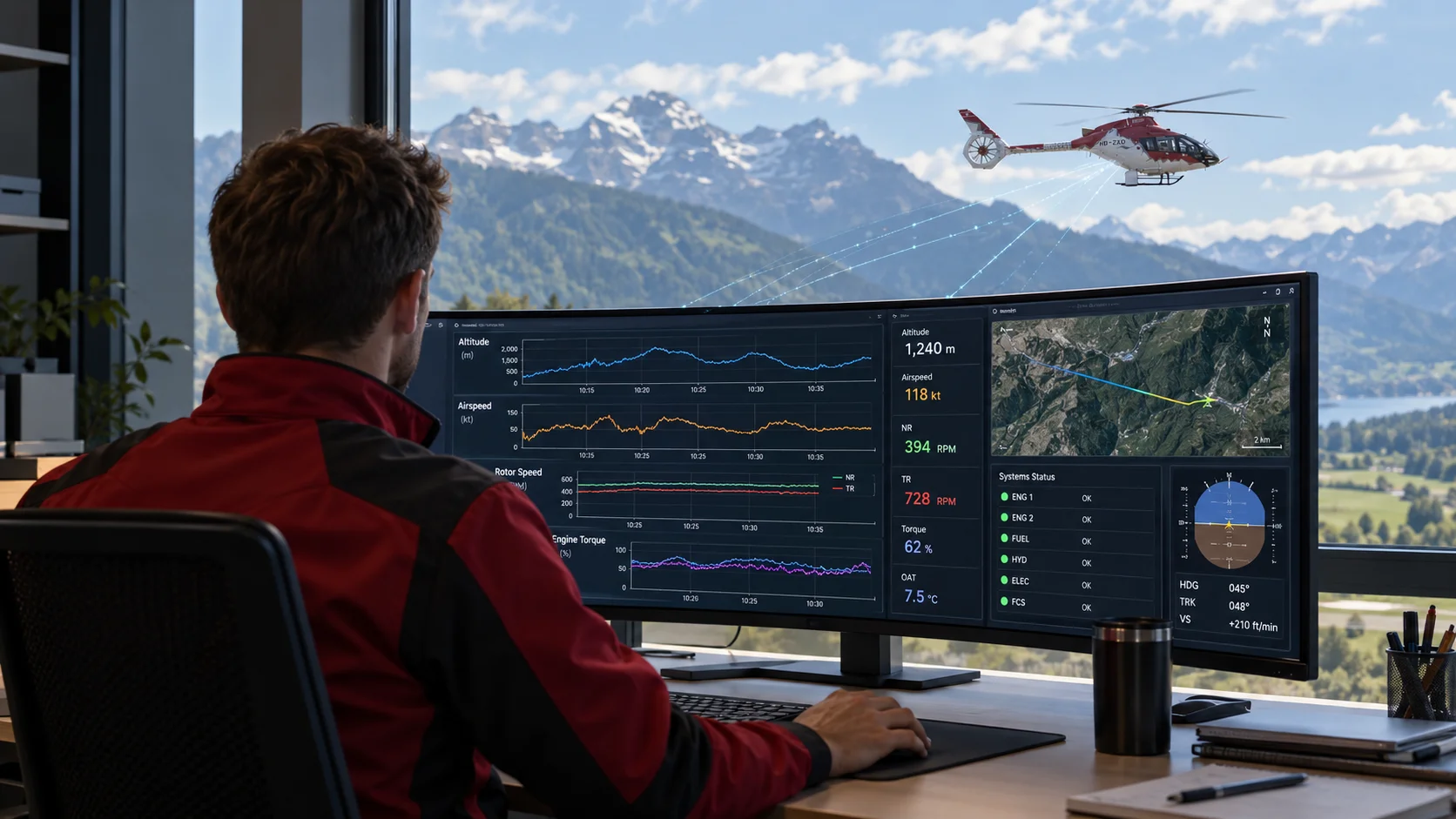
Engineering systems · Technical ownership · Delivery
Flight Test Data Analysis Engineer — Kopter Group AG, Zurich
From aircraft data to engineering results: flight-test systems, architecture and operations.
At a glance
I build, own and operate the technical systems engineering teams depend on — from Python and PostgreSQL data platforms to operational tools — and increasingly take the requirements, architecture and delivery decisions around them. I currently do that in helicopter flight test at Kopter Group.
In production
Selected work
Each case study covers the problem, the technical decisions, the architecture and how the system behaves in operation.
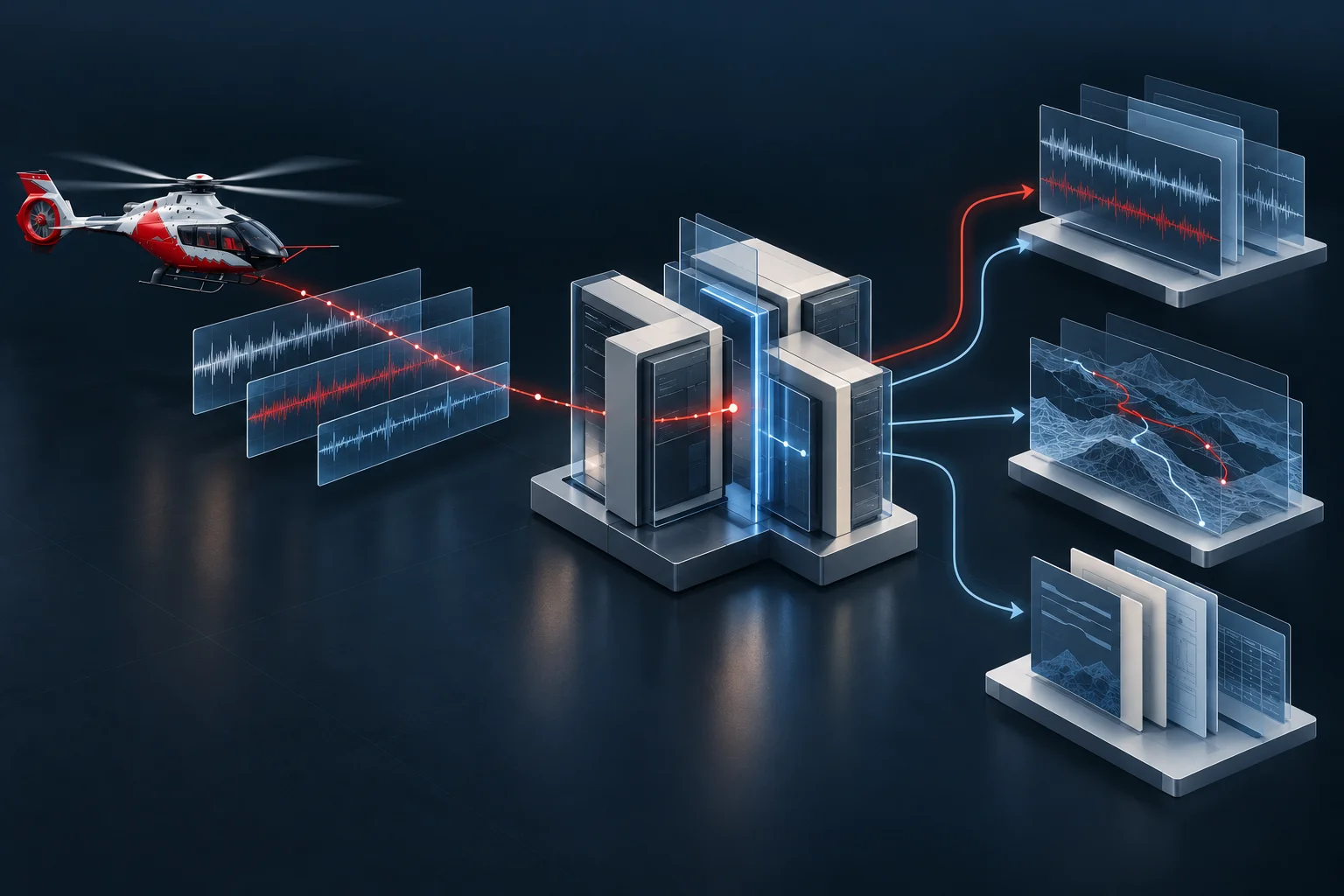
Architecture, development and daily production operation: event-driven orchestration, a priority and dependency model, parallel execution and PostgreSQL execution history.
~15 planned tasks per flight · processed data used by 50–75 engineering users · daily production operation
Read the case study →
Engineering-side requirements, architecture selection and technical acceptance; after the external consultants departed, delivery coordination across corporate IT, network, cybersecurity and cloud teams, including resolution and escalation of cross-organisational blockers.
Multi-year workstream · three architecture options assessed · ~15 servers and workstations in scope · legacy access retained through acceptance
Read the case study →Clarified requirements with instrumentation users, designed and built a decoupled Python replacement for a legacy antenna-tracking tool, then supported operational validation and handover.
10 Hz antenna position feed · validation from replay through live flights · documented operational handover
Read the case study →A public-data product built and run end to end: city-specific adapters, PostgreSQL history, short-term forecast evaluation, a Flask/Leaflet interface and VPS operations.
5 Swiss cities · ~90 facilities · history since approximately September 2025 · live at findparking.ch
Read the case study →Also documented
How I contribute
Turn initial needs and user feedback into testable operational behaviour, including the physical constraints behind an interface.
See the antenna-tracking case studyCompare technical options against operational, cybersecurity and administrative constraints, then select an engineering-side solution.
See the infrastructure case studyDesign, develop and run production systems with visible execution state, priorities, dependencies and failure handling.
See the data-operations case studyKeep specialist teams aligned through technical acceptance and cutover, and document systems so operators can use and diagnose them independently.
See the operational handoverExperience
Jun 2022 – Present
Kopter Group AG · Zurich, Switzerland
Earlier roles at Kopter
Supported helicopter performance analysis by developing MATLAB tools for engine behavior, installation losses and air-intake-efficiency studies.
Developed MATLAB tools and validation scripts to improve flight-mechanics analyses and simulation accuracy.
Developed a MATLAB application for processing and analyzing flight-test data to support engineering investigations and performance assessments.
Technical environment